
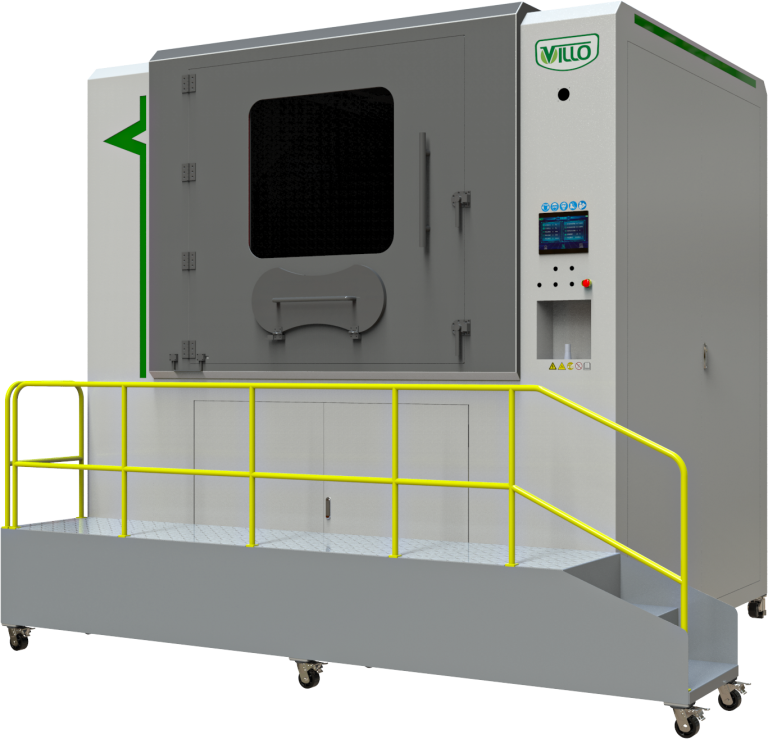
For most metalworking shops cutting, grinding, welding, or laser-processing steel and aluminum, a cartridge dust collector is the right call — it captures the fine sub-10 µm dust these processes produce, fits in a smaller footprint, and costs less upfront. Go baghouse only when your dust is heavy, hot, sticky, fibrous, or abrasive enough to shred pleated media in months. That's the short answer. Below is what actually drives the decision on a shop floor.
The Core Difference: Pleated Cartridges vs Woven Bags
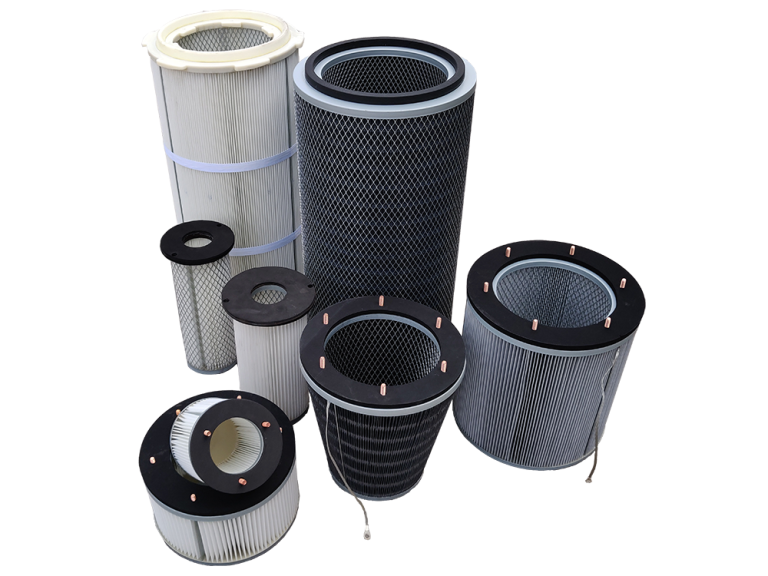
A cartridge collector uses pleated filter media — think of an accordion-folded sheet of non-woven polyester or cellulose wrapped around a metal cage. One 26-inch cartridge packs roughly 200–350 ft² of media into the space a single 12-inch bag occupies. That density is the whole story.
A baghouse uses long cylindrical or envelope-style fabric bags, typically 10–14 feet tall, suspended from a tube sheet. Less media per cubic foot of cabinet, but the media itself is tougher, handles higher temperatures, and shrugs off abrasion that would chew through a pleated cartridge in weeks.
That geometry difference cascades into every other trade-off: air-to-cloth ratio, pulse-cleaning behavior, cabinet height, filter cost, downtime. If you understand the pleat-versus-bag geometry, the rest of this article is just math.
Which Dust Are You Actually Dealing With?
This is where most shops pick wrong. Not all “metal dust” behaves the same way.
Cartridge collectors shine with:
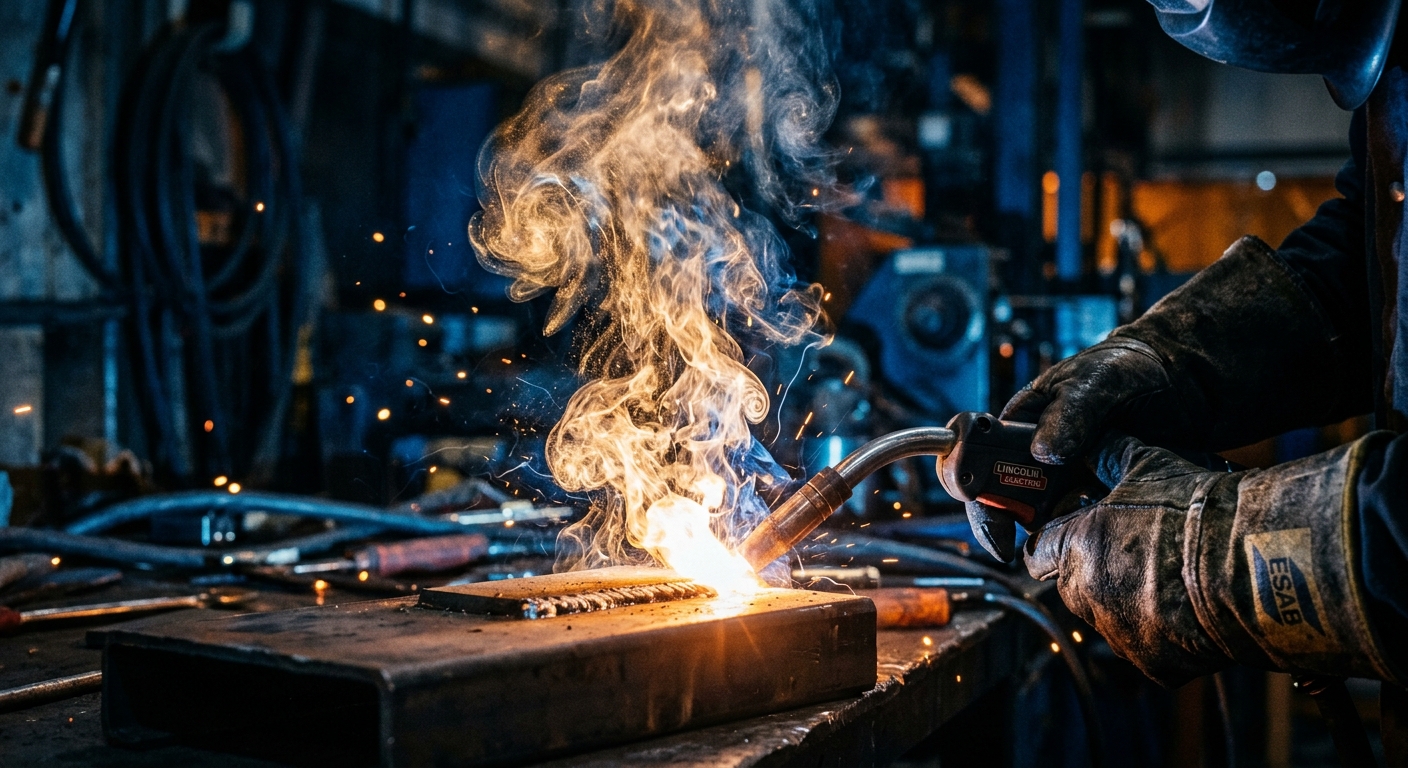
- Fine welding fume (0.1–1 µm particle size)
- Laser cutting smoke from mild steel, stainless, aluminum
- Dry grinding dust from stationary machines
- Plasma cutting fume (with proper pre-cooling)
- Light buffing and deburring dust
Baghouses earn their keep with:
- Thermal cutting on heavy plate where sparks and hot particles survive the ductwork
- Foundry dust with residual heat
- Shot blasting and abrasive media recovery
- Sticky or oily mist-laden dust (MQL machining)
- Fibrous material like steel wool, brass turnings, or mixed recycling streams
For example, a sheet-metal fab shop running three fiber lasers on 3–12 mm mild steel will do beautifully with a cartridge unit. A structural steel fabricator running oxy-fuel torches on 50 mm plate, with glowing slag dropping into the hood? That shop needs a baghouse — or a spark trap and cooling section ahead of cartridges.
Our guide on choosing the right industrial dust collector walks through matching dust characteristics to equipment in more detail.
Filtration Efficiency and Air Quality Compliance
Here's the uncomfortable truth: a modern nanofiber cartridge at MERV 15 will outperform most standard polyester bags by a solid 10–20% on sub-micron particles. For OSHA hexavalent chromium (Cr⁶⁺) compliance during stainless welding, or for manganese exposure limits below 20 µg/m³, cartridges are usually the path of least resistance. Many ship HEPA-ready with a secondary after-filter.
Baghouses can hit comparable efficiency with membrane-coated bags (ePTFE laminate), but you'll pay 2–3× the bag cost and still need careful air-to-cloth ratio design — typically 3:1 to 4:1 for fine metal dust, versus the 1.5:1 to 2.5:1 you get with pleated cartridges.
If your shop is recirculating filtered air back indoors to save on winter heating, cartridges with HEPA after-filters are almost always the smarter choice. See why filter quality matters for the physics behind it.
Head-to-Head: The Numbers That Actually Matter
Strip away the sales pitches and here's the comparison most buyers wish they had six months earlier:
| Criteria | Cartridge Collector | Baghouse Collector |
|---|---|---|
| Filter media area per footprint | High (pleated) | Low (cylindrical bags) |
| Best dust type | Fine, dry, <10 µm | Heavy, fibrous, hot, sticky |
| Typical efficiency | MERV 15–16, HEPA option | MERV 10–13 (membrane: 15) |
| Upfront cost | Lower | Higher |
| Filter replacement | $$ per cartridge, fewer units | $ per bag, many more units |
| Footprint | Compact, roof-mountable | Large, tall, usually outdoors |
| Max operating temp | ~80 °C (180 °F) | Up to 260 °C (500 °F) |
| Typical service life | 1–3 years | 3–10 years |
Notice nothing is universally “better.” The right pick depends entirely on your dust, your duty cycle, and your building constraints.
Footprint, Headroom, and the Building Constraint Nobody Talks About
A baghouse sized for 20,000 CFM typically stands 20–30 feet tall and occupies a 15×10 foot footprint outdoors. A cartridge unit at the same airflow? Maybe 10 feet tall and 8×6 feet — and it can often sit indoors against a wall.
That matters. A lot of metalworking shops are in leased industrial condos with a 16-foot ceiling and no room to punch through the roof. For them, the decision is made before they even compare filter specs.
On the flip side: if you have outdoor space and a process with lots of large chips and nuisance sparks, a tall baghouse with a long drop-out hopper gives particles time to fall out of the airstream before they ever touch the filter media. That physics-based pre-separation is exactly why baghouses still dominate in heavy industry.
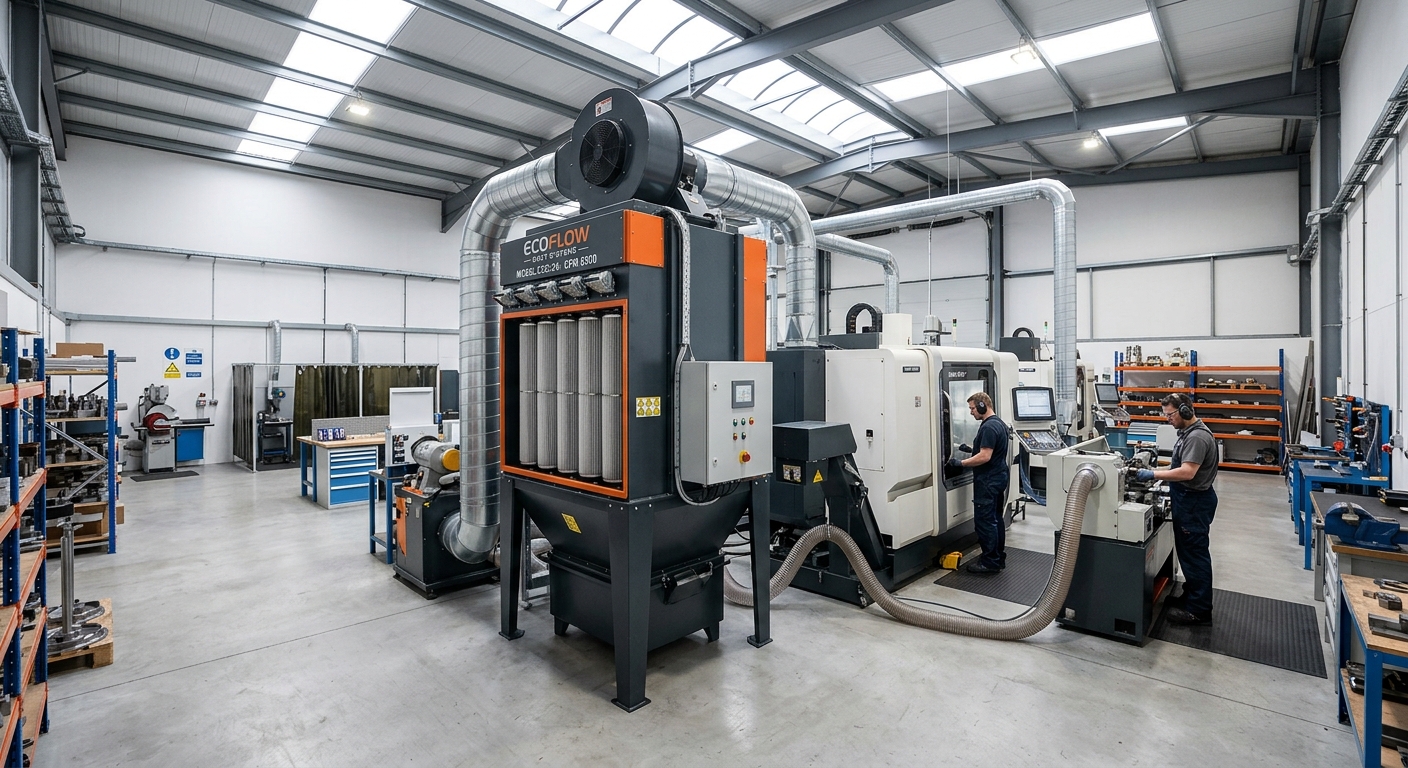
Real-World Scenario: A 12,000 ft² Laser Job Shop
A customer recently walked us through their setup — a 12,000 ft² contract fab shop running two 6kW fiber lasers, four MIG welding cells, and a robotic grinding station. Their old shaker baghouse was 15 years old, leaked fine fume into the shop, and needed 48 bags replaced every 14 months at roughly $3,200 per change-out plus a full day of downtime.
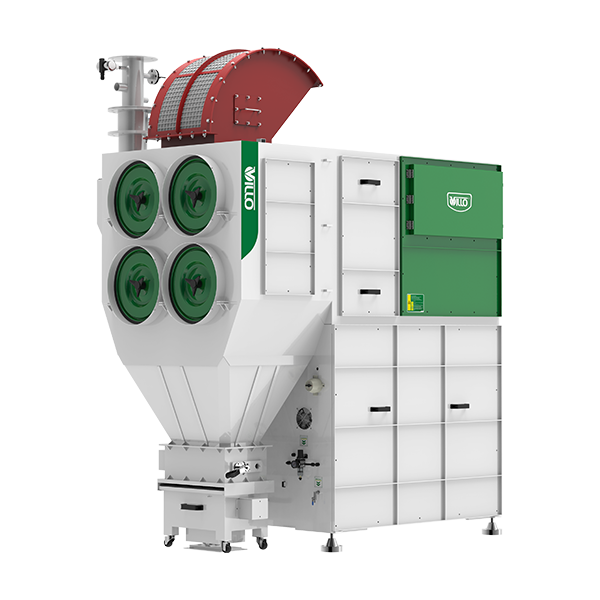
They switched to a reverse-pulse cartridge collector with 16 nanofiber cartridges, rated for 18,000 CFM. Results after year one:
- Indoor air manganese dropped from 35 µg/m³ to below 8 µg/m³
- Cartridge change-out: once per 22 months, 3 hours of labor
- Compressed air consumption dropped 40% (pulse-on-demand controller)
- Footprint freed up 180 ft² of shop space for an additional press brake
Would the same swap work for a foundry or a shot-blast room? Absolutely not. But for a clean cutting-and-welding shop, the cartridge path paid for itself in under two years. You can read more about how modern dust collection is changing manufacturing economics.
Maintenance Reality Check
Salespeople love to quote “5-year filter life.” On a real shop floor it's almost never that simple.
Cartridge maintenance headaches:
- Pleats pack with dust if cleaning pulses are undersized — kills filter life fast
- Oil mist or condensation will blind nanofiber media in weeks
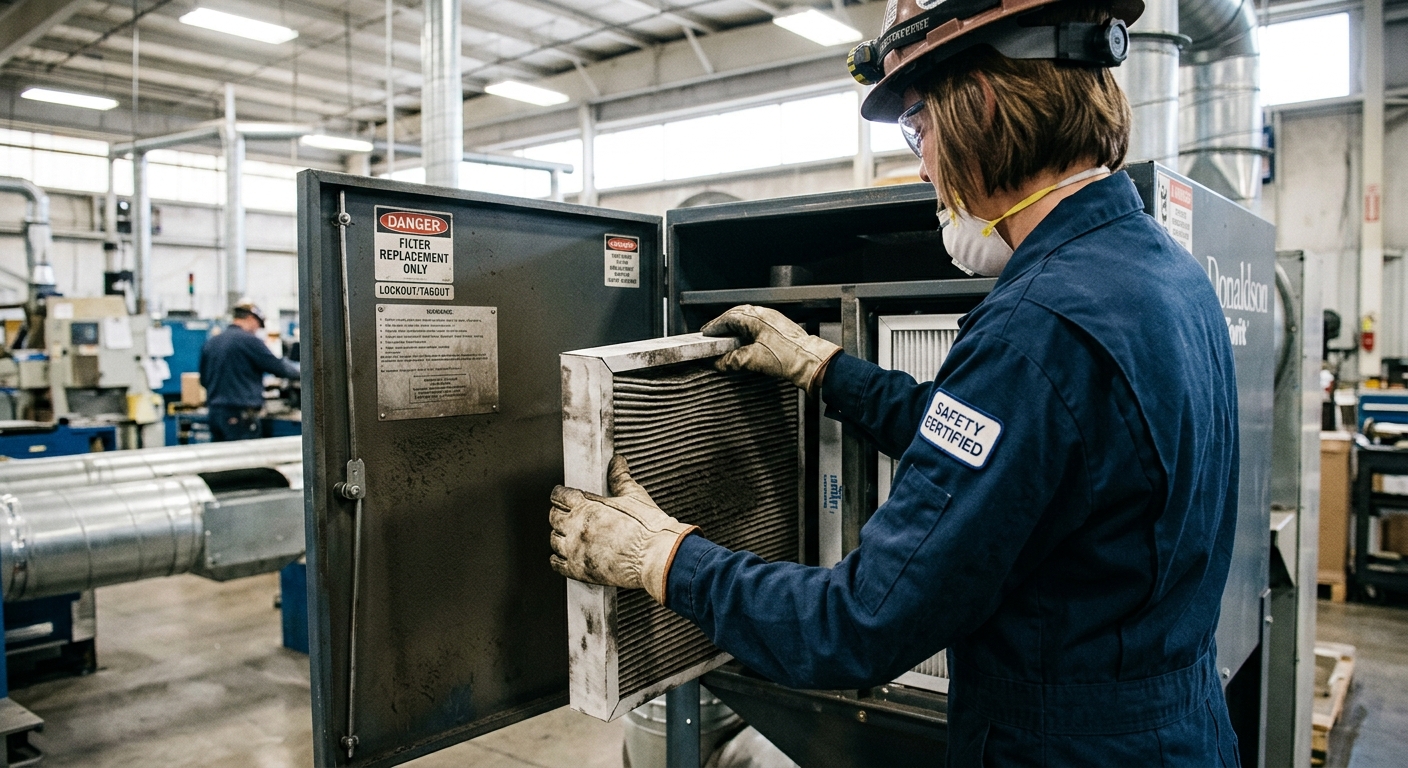
- Change-out is quick (20 min per cartridge) but cartridges cost $150–$400 each
Baghouse maintenance headaches:
- Bag change-out is a full-day, multi-person job inside a confined space
- Cage corrosion and bag abrasion from sharp particles
- More bags = more potential leak points at the tube sheet
A good rule: if your maintenance team is stretched thin and you want the lowest number of service events per year, cartridges usually win. If you want longer intervals between services even though each one is bigger, baghouses win.
The Combustible Dust Question
Aluminum, magnesium, titanium, and certain steel alloys produce dust that is genuinely explosive. NFPA 652 and the updated NFPA 660 (2026) don't care whether your collector uses cartridges or bags — you need a Dust Hazard Analysis (DHA) either way, and you need appropriate explosion protection.
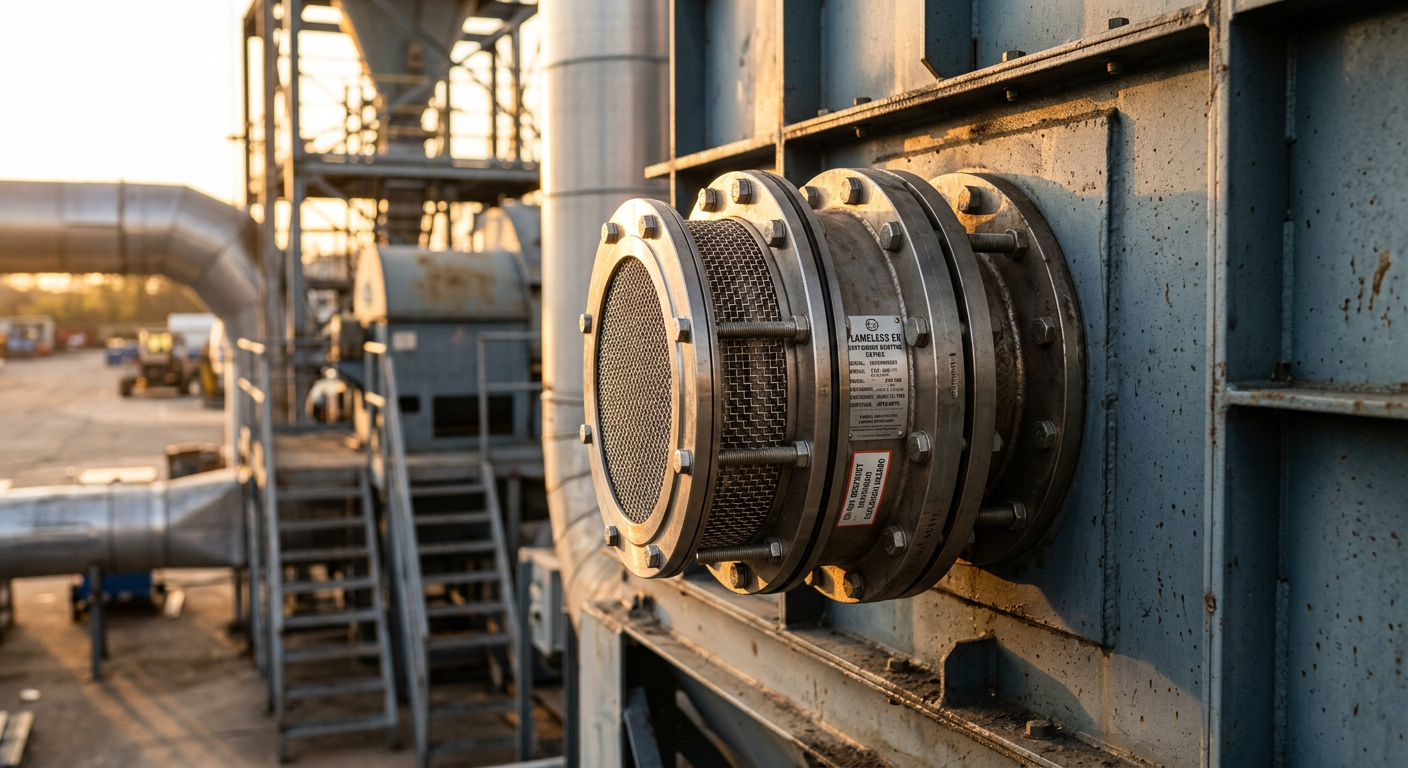
That said, cartridge collectors are often easier to fit with flameless venting, chemical suppression, or isolation valves because the cabinet geometry is more standardized. Baghouses, being taller and more varied in shape, sometimes require custom-engineered vent panels.
If you're processing any reactive metal powder — or even doing heavy aluminum grinding — read our primer on explosion-proof dust collectors before you finalize anything. This is not a corner to cut.
Total Cost of Ownership Over 10 Years
A 15,000 CFM cartridge collector might run $35,000–$55,000 installed. An equivalent baghouse: $55,000–$85,000. But that's just the sticker.
Over 10 years, factor in:
- Filter media: Cartridges: ~$8,000–$12,000 total. Bags: ~$15,000–$25,000 total.
- Compressed air for pulse cleaning: Comparable, slight edge to modern cartridge units with on-demand cleaning.
- Labor: Cartridges ~8 service hours/year. Baghouses ~20–30 hours/year.
- Energy: Baghouses often run at lower static pressure (~4–6 in w.g.) vs cartridges (~5–8 in w.g.) — saves maybe 5–10% on fan power.
Net: for most metalworking applications, cartridges come out 20–35% cheaper over the full lifecycle. The exception is heavy, hot, or abrasive dust — where you'd be replacing cartridges every 6 months and the baghouse easily wins.
How to Make the Call for Your Shop
Run through this short checklist. If you answer “yes” to three or more in either column, that's your answer.
Go cartridge if:
- Dust is dry and mostly sub-10 µm
- Indoor installation required
- You need HEPA-level recirculation
- Shop is under 50,000 ft²
- Maintenance team is small
Go baghouse if:
- Dust is hot (>80 °C at the collector inlet)
- High loading: >5 grains per ft³
- Abrasive particles or fibrous material
- Oily or moisture-laden airstream
- Outdoor installation with height available
Still on the fence? That usually means your process is mixed — and the right move is a cartridge collector with a pre-separator (cyclone or drop-out box) handling the heavy fraction before air ever hits the pleated media. It's the best-of-both setup, and it's what we specify more often than any single-technology solution.
Getting the Specification Right the First Time
The worst dust collector purchase is the one that's sized or configured wrong — not the one that's the “wrong type.” A properly designed cartridge unit and a properly designed baghouse will both do acceptable work on most metalworking dust. A poorly designed version of either will clog, leak, and frustrate everyone within a year.
Before you sign anything, make sure your supplier has run actual airflow calculations for every pickup point, specified filter media suited to your dust chemistry (not just “polyester”), and sized the pulse-cleaning system with real CFM data — not rule-of-thumb shortcuts. Our team at villotech has built custom collectors for everything from battery-grade laser notching to heavy plate cutting; if you want a straight opinion on which direction makes sense for your shop, get in touch with the specs of your process and we'll tell you honestly which way to lean — even if it's not the bigger-margin product.