
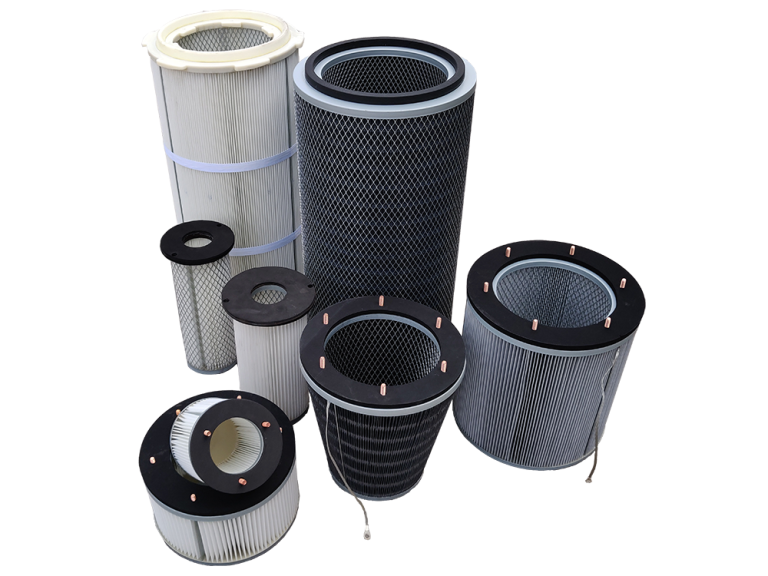
The cheapest filter cartridge is almost never the cheapest filter cartridge. Once you add up energy waste from higher differential pressure, shorter replacement cycles, extra compressed air for pulse cleaning, downtime during changeouts, and disposal of more frequent waste, a $40 budget cartridge typically costs 2–3x more than a $140 premium nanofiber over a three-year horizon. That's the short version. The longer version — with real numbers — is below.
Why Purchase Price Is the Worst Way to Choose a Cartridge
Procurement teams love a line-item win. Swap a $140 cartridge for a $40 one across 24 filter positions, and you've “saved” $2,400 on paper. The maintenance team will spend the next year quietly burning that savings — and a lot more — at the electricity meter.
Here's the thing: a dust collector filter has at least five cost components, and the sticker price is usually the smallest. Energy consumption driven by pressure drop is almost always the biggest, often 3–5x the purchase price over the filter's life. If you're not modeling that, you're not really comparing cartridges.
The Five Real Costs of a Filter Cartridge
1. Purchase price
The obvious one. Usually 15–25% of lifetime cost.
2. Energy cost from differential pressure
Every 1 inch of water gauge (inWG) of pressure drop across your filters costs roughly $300–$500 per year in fan energy for a 10,000 CFM system (at $0.12/kWh). A cheap cartridge that runs at 5 inWG instead of 2.5 inWG can quietly add $750–$1,250 per year per system.
3. Compressed air for pulse cleaning
Budget cartridges blind faster and need pulse-jet cleaning more often. Compressed air is expensive — about $0.20–$0.30 per 1,000 scf. Doubling pulse frequency on a 50-cartridge unit can add $1,500–$3,000/year.
4. Labor and downtime for changeouts
A full cartridge change on a mid-size collector is 4–8 hours of labor plus production downtime. If your shop bills $200/hour of lost throughput, an extra changeout per year per collector is real money.
5. Disposal
Used cartridges loaded with metal dust, pharmaceutical actives, or combustible powder are hazardous waste in many jurisdictions. More changeouts = more drums = more manifests.
Pressure Drop: The Silent Energy Vampire
Fan motors don't care about cartridge brand names. They care about static pressure. A 25 HP fan pulling against 6 inWG instead of 3 inWG draws roughly 30–40% more power — continuously, every shift, every day.
Run the math on a two-shift operation, 4,000 hours per year, and you're looking at $2,200–$3,500 in additional electricity per collector, per year. That's per collector. Most facilities have multiple. The “cheap” cartridges paid for themselves in waste energy by month four.
This is also why media surface area matters more than thread count. A pleated nanofiber cartridge with 350 sq ft of effective area at a lower face velocity will outperform a 220 sq ft cellulose cartridge on both pressure drop and life — even if the spec sheet looks similar.
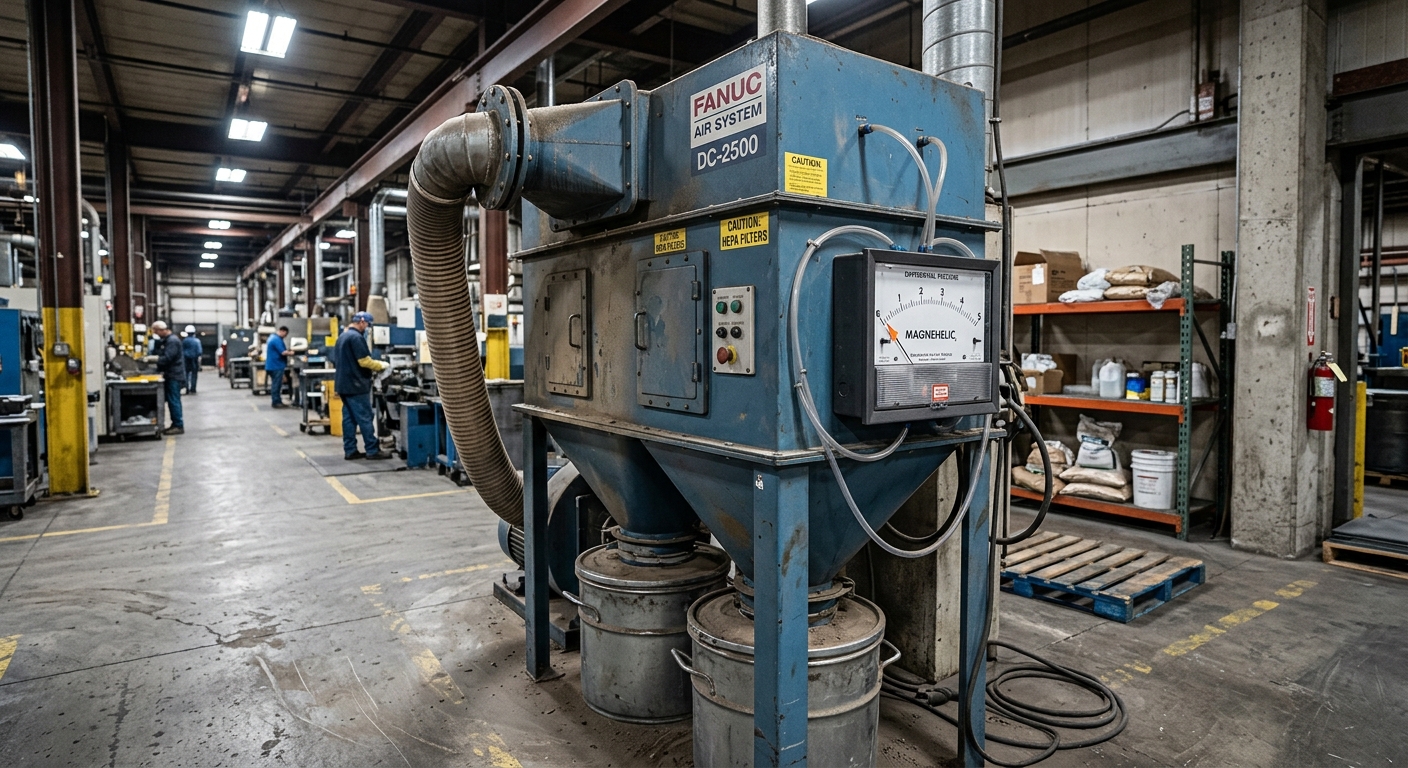
A Real-World Example: The Welding Shop That Switched Twice
A 40-person fabrication shop in the Midwest switched from premium nanofiber cartridges to a budget Asian import to “save 60%.” First six months looked great on paper. Then:
- Differential pressure climbed from 2.8 inWG to 5.4 inWG within four months
- Pulse valves were firing every 35 seconds instead of every 4 minutes
- Their 100 HP fan tripped twice during peak welding hours
- Two cartridges failed mechanically (pleat collapse), releasing visible dust into the shop
They changed all 32 cartridges out at month 9 — more than triple the rate of their original setup. After tallying energy, compressed air, labor, and one OSHA-triggering visible emission event, the “savings” turned into roughly $14,000 in net additional cost in year one. They switched back. This isn't a rare story — it's the typical one. The pattern shows up across welding, woodworking, and even pharmaceutical dust collection, where filter integrity also drives compliance risk.
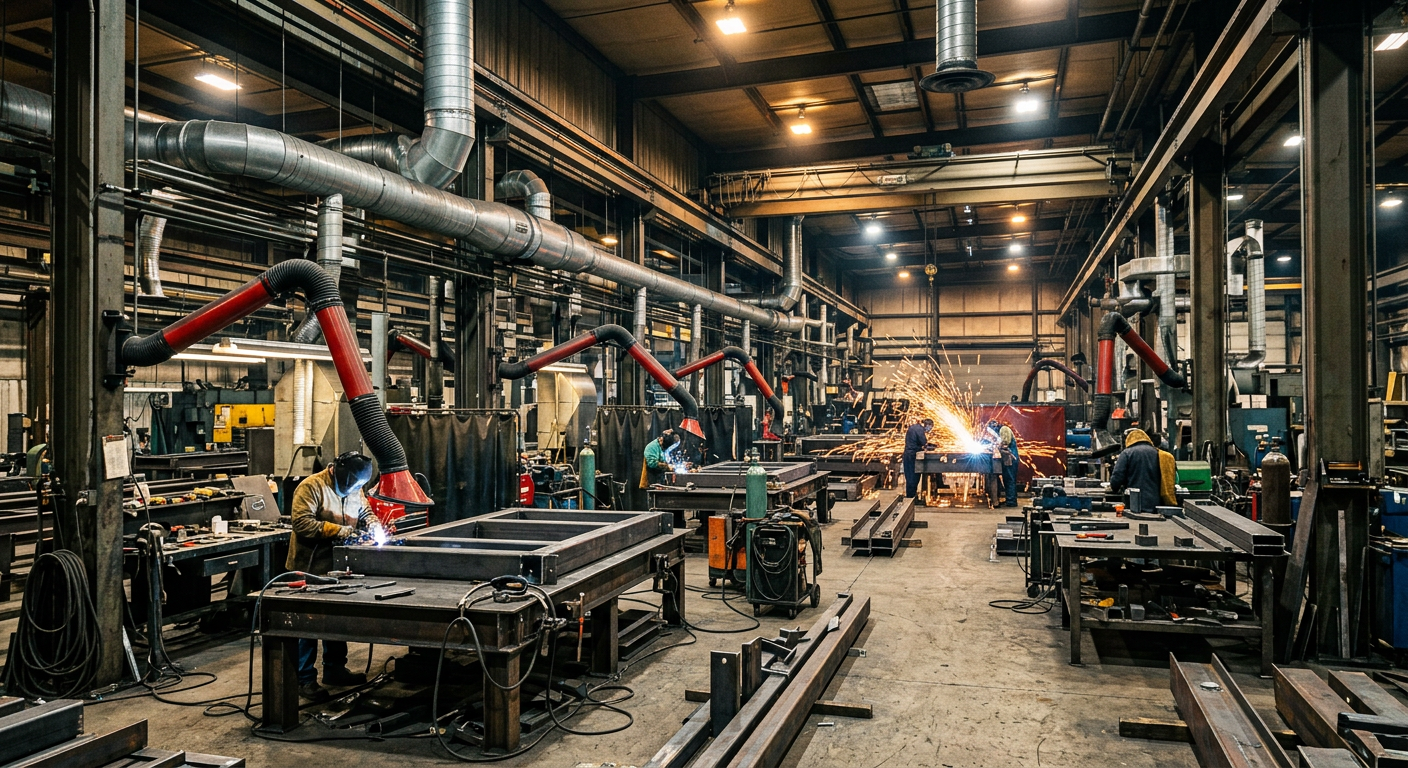
What Actually Makes a Cartridge Last Longer
Media type
Nanofiber-coated polyester or PTFE membrane builds a surface cake instead of letting dust embed deep in the media. That means lower pressure drop, easier pulse release, and 2–4x the service life of plain cellulose.
Pleat geometry
Open pleats with wider spacing release dust better during pulse cleaning. Tight, dense pleating maximizes surface area on paper but traps dust in the pleat valleys, causing premature blinding. This is one of the most common cartridge dust collector design mistakes.
End-cap and seal quality
Cheap cartridges fail at the gasket long before the media is spent. Bypass leakage is invisible and devastating — your downstream MERV rating becomes irrelevant if 5% of the air is sneaking around the seal.
Antistatic and FR coatings
For combustible dust, this isn't optional. A non-conductive cartridge in a combustible dust collector is a deflagration risk — see our notes on explosion protection systems.
The Compressed Air Math Nobody Runs
Pulse-jet cleaning uses 6–10 scf per pulse on a typical 10-inch diameter cartridge. If your timer board is firing every 30 seconds across 24 cartridges, that's roughly 17,000 scf per shift just on cleaning. At $0.25 per 1,000 scf, that's about $4.25 per shift, or $2,200 per year per collector — on cleaning alone.
Premium media that pulses every 5 minutes instead drops this by 80%+. Bonus: less pulsing means less mechanical stress on pleats, which extends life further. The two effects compound.
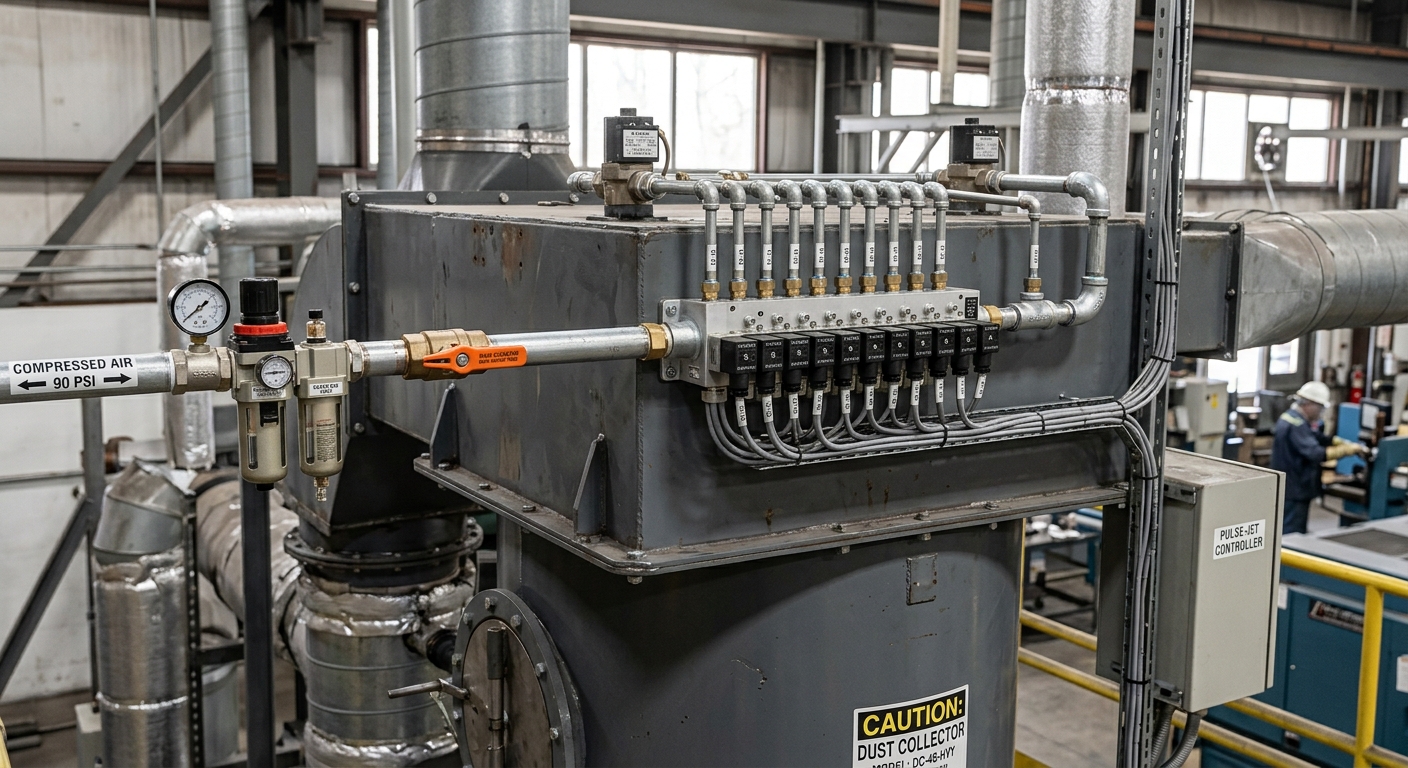
When Cheap Cartridges Become a Safety Problem
This is where TCO stops being about dollars. Budget cartridges in combustible dust applications — aluminum, sugar, wood, lithium, certain pharmaceuticals — introduce risks that don't show up on a purchase order:
- Static buildup: Non-grounded media accumulates charge. One discharge inside a dust-laden housing and you've got an ignition source.
- Pleat collapse: Mechanical failure under high differential pressure can dump a slug of dust into the clean-air plenum and downstream ductwork.
- Compromised emissions: Higher penetration means more respirable dust in the workspace — a regulatory and health liability.
If your facility handles combustible powders, the cartridge spec is part of your overall safety case alongside explosion venting and isolation. Cheaping out on the filter element undermines every other safeguard you've paid for.
How to Build a Real TCO Comparison Before You Buy
Skip the spec-sheet beauty contest. Ask vendors for these numbers and run them yourself:
- Guaranteed average differential pressure at your dust load and face velocity — not the “initial” figure.
- Expected service life in months, in writing, for your dust type.
- Recommended pulse interval at steady state.
- MERV rating with verified emissions data — ideally ISO 16890 tested.
- Seal and end-cap construction — molded urethane vs. metal-banded, gasket material.
Then plug into a simple spreadsheet: (purchase price ÷ life in years) + (energy cost from ΔP) + (compressed air cost) + (labor per changeout × changeouts per year) + (disposal). The winner is rarely the cartridge with the lowest line price. Sometimes it's the mid-tier option, sometimes the premium — but it's almost never the bottom-of-the-barrel import.
The Bottom Line on Cartridge Buying
Cheap filter cartridges are a classic case of optimizing the wrong variable. You're not buying a piece of pleated paper — you're buying a multi-year stream of energy bills, maintenance hours, and risk exposure. The cartridge is just the trigger.
If your current spec was chosen on price alone, do the math on your next purchase. Pull your ΔP logs, count your pulse frequency, and add the energy cost. Most facilities are stunned by what they find — and the payback on switching to better media is usually under 12 months.
If you want help running the TCO numbers for your specific dust profile, or you're evaluating cartridge upgrades alongside a wider central dust collection and explosion protection review, the villotech engineering team is happy to look at your data and tell you straight whether a swap makes sense.